

listing page or single post
https://www.hellersearch.com/blog
Heller Blog
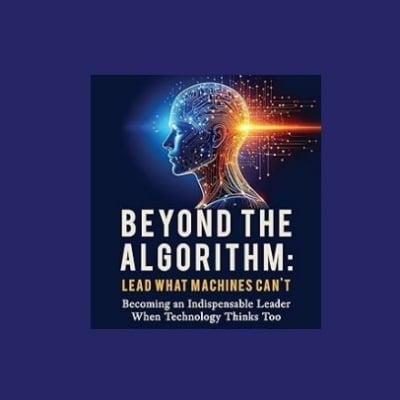

In this excerpt from Beyond the Algorithm, Lead What Machines Can’t: Becoming an Indispensable Leader When Technology Thinks Too, executive coach Joe Topinka explains how to turn strong risk management practices into a strategic asset that fosters collaboration and innovation.
Study after study, from the World Economic Forum’s “Global Risks Report” to studies and papers from IBM, McKinsey, and PwC, show that boards and executive teams overwhelmingly see cyber as a core business issue, not just an IT concern. Yet many organizations still treat these areas narrowly. They see them as compliance hurdles or purely defensive measures. This mindset is outdated and dangerous. Trust has become a primary driver of customer loyalty, brand reputation, and even market valuation. Without clear leadership on security, privacy, and ethical technology use, companies undercut the very trust they need to grow.
The biggest misconception is that governance slows down development. In truth, clear guardrails speed up progress. They create clarity and safety, so teams know how to move without constant second-guessing.
Many people hear the word governance and think bureaucracy. In reality, good governance means clear responsibilities, lightweight controls, and shared ownership. It ensures decisions are made with eyes wide open.
Your distributed decision guardrails—what I call your Transformation Risk Guide—make this clear. They define how decisions about technology and data are made across the enterprise. From early requirements to implementation, operations, and eventual phase-out, these guardrails ensure that business-led initiatives follow consistent standards for security, privacy, architecture, and compliance. They give business leaders the freedom to innovate while keeping risk, trust, and accountability in balance.
In today’s world, many systems are selected directly by business units. Some are what I call advocated systems, fully vetted and supported by IT. Others are non-advocated systems, chosen by business leaders without full IT oversight. Either way, once a system is brought in, leaders own far more than vendor selection. They take on obligations for security, privacy, integration, ongoing maintenance, and compliance.
This is where cyber, privacy, ethics, and architecture move from being obstacles to becoming strategic enablers. Leaders who understand these responsibilities from the beginning make better choices. They build trust with customers and reduce surprises later.
The Gears of Enterprise Risk Collaboration
Governing cybersecurity, privacy, digital ethics, and data-driven decisions is a collaborative system with three interconnected components that work like gears. Each gear – risk enablement teams, cross-functional risk leaders focused on cybersecurity enablement, and business unit partners – relies on the others to operate effectively. When aligned, they protect the business while enabling it to move with speed and confidence. The gears include:
Risk enablement teams, formed by leaders forming a cross-functional team, establish risk policies and guardrails, including AI, legal, privacy, architecture, ethics, security, and data use. These are your domain experts. They develop policies, oversee standards, and maintain the body of knowledge that defines how the organization approaches legal, privacy, ethics, cyber, and responsible technology practices.
Risk enablement teams create the methods, tools, and metrics that all teams across the company can use throughout the decision lifecycle. They also provide ongoing support to help business and IT leaders apply these principles in real-world contexts. Their role goes beyond issuing blanket mandates. They build clear, practical frameworks that help the organization make smart, risk- aware choices.
Cross-functional risk leaders form the cybersecurity enablement team. This group includes leaders from across the business who come together to shape risk policies, set guardrails, and resolve decisions that span departments. These leaders bring experience from operations, product development, marketing, IT, legal, and customer experience. Their diversity ensures that risk decisions are grounded in how the business actually runs.
They also serve as escalation points when decisions reach beyond one team. This is where tradeoffs are discussed, such as balancing speed to market with customer data protection or aligning automation efforts with fairness and transparency principles. This group helps maintain balance between protecting the business and helping it grow.
Business units partners and advocates serve where the day-to-day work happens, ensuring the adoption and support of cybersecurity practices through the company. Business units operate with autonomy but within a structure. They adopt and follow the cybersecurity, privacy, and ethical practices developed by domain experts and reinforced by enterprise leaders.
Within these business units, advocates and team leads are critical. They bring practices to life in projects and workflows. They translate policies into local action, identify issues early, and escalate risks when needed. Just as importantly, they provide feedback to improve the system. This keeps governance connected to operational reality. When business units are supported rather than micromanaged, they become essential allies in protecting the company and building customer trust.
These three gears form a connected system. Risk knowledge flows from domain experts. Priorities and decisions are shaped by cross-functional leaders. Business units put the principles into action, and their insights help refine the model. This collaborative approach turns cybersecurity, privacy, and ethics into enablers of innovation. It replaces reactive compliance with a culture of shared ownership. And it gives the business the clarity and confidence it needs to move forward without compromising what matters most.
A Unified Model for Business-Led Risk Management
Your risk governance framework, introduced earlier through the Transformation Risk Guide, shows how this all fits together in a unified model. It illustrates four interconnected domains that keep business-led technology initiatives safe and scalable:
-
Legal requirements: meeting contractual, regulatory, and statutory obligations.
-
Cybersecurity: protecting company and customer data, preventing disruptions and reputational harm.
-
Privacy: honoring promises to customers and regulators on data collection, use, and storage.
-
Solution architecture: making sure new systems integrate properly and do not become fragile one-offs.
Risk is not static. It evolves across a lifecycle that starts by identifying threats and obligations, continues by putting controls in place, and then requires ongoing monitoring and adaptation. It only ends when a system is decommissioned and data is retired responsibly. These guardrails work together like gears, each reinforcing the other. This is how you enable business- led innovation while keeping customer trust and long-term sustainability intact.
The effective use of these practices also build another strategic asset: trust. Customers are far more likely to share data, embrace new services, and deepen relationships when they believe your company uses technology responsibly. Practices such as fairness, transparency, and privacy by design build long-term loyalty.
This is why digital ethics cannot be delegated only to IT or risk teams. It is a leadership issue. Organizations that prioritize responsible technology create a foundation that supports continuous innovation. They also avoid the kinds of scandals and reputational damage that can erase years of investment overnight.
Exercising Risk Preparedness
Good governance is tested and refined through practices that show how your organization responds under pressure. This is where Business Impact Assessments (BIAs) and tabletop exercises come in.
Reaching beyond a catalogue of systems and downtime thresholds, a BIA connects technology risks to business realities by asking what matters most. Which processes protect your biggest revenue streams? Which ones ensure customer trust and compliance? A BIA puts real numbers on these questions, so leaders understand exactly what an hour of downtime costs. It also sets meaningful Recovery Time Objectives (RTO) and Recovery Point Objectives (RPO). That turns risk-funding decisions into business-led discussions.
Tabletop exercises take these priorities and stress-test them. They bring IT, operations, legal, HR, and executives together to work through realistic crisis scenarios. This is where hidden dependencies and gaps in decision paths come to light.
Practicing a ransomware scenario, for example, goes well beyond the technical response. It forces clarity on who can approve payments, how customers and regulators are notified, and what happens if data restoration takes longer than planned. These exercises keep governance alive and practical. When done consistently, they turn cybersecurity, data protection, and ethics from abstract principles into living capabilities. They protect customer trust and give leaders the confidence to keep pushing forward.
What You Can Do NowSteps leaders can take to make strong risk management practices into a strategic asset. Use a business impact analysis to set clear priorities. Identify critical business processes, quantify the impacts of downtime, and establish realistic recovery time objectives and recovery point objective targets. Tie resilience investments directly to these priorities. Run tabletop exercises with business leaders. Move beyond IT-only drills. Bring in legal, HR, operations, and executive decision-makers. Use real scenarios to practice making hard calls under stress. Embed guardrails across the investment decision lifecycle. Make sure security, privacy, compliance, and architecture are addressed from requirements and design through procurement, operations, and system retirement. Establish principles for ethical technology use. Set clear expectations for fairness, transparency, and privacy by design. Make these part of how new initiatives are approved and measured. Reinforce trust as a source of growth. Remind teams that protecting customer data and using technology responsibly does more than avoid penalties. It builds deeper relationships that lead to more opportunities. |
Cyber, privacy, and ethics are the foundations that makes innovation possible at scale and with confidence. When treated as strategic enablers, they allow your organization to move faster and earn trust that compounds over time.

Written by Joe Topinka
Joe Topinka is an award-winning CIO, executive coach, and author with more than four decades of technology leadership experience. He founded CIO Mentor to advise IT and business leaders across industries. Topinka has served as a strategic advisor to Fortune 500 firms, startups, and public agencies. He is a former Board chair and current board member emeritus of the BRM Institute, and the author, most recently, of Beyond the Algorithm: Lead What Machines Can’t, a playbook for accountable, business-minded leadership in the AI era.