


The Technology Talent Market Spotlight: “The Enterprise Value CIO”

For our series on attracting the best technology leaders, Charley Betzig, Heller Managing Director, explains why manufacturing and supply chain CEOs are seeking an “enterprise value” CIO who can drive new value in a change-resistant culture, what it takes to find one, and how candidates can win the role. “Every member of the executive team has their own idea about how to apply AI to the business. The right CIO will guide that conversation to a single, agreed-upon direction — and then own or share ownership for the execution,” Betzig says.
Return on Tokens: The AI Metric CIOs Actually Need

Measuring AI activity alone is not enough to gain value, argues Kevin Rooney, CIO at consultancy West Monroe. He argues that measuring what matters to achieve ROI includes moves such as connecting AI to workflows (instead of experiments), documenting baseline conditions before deployment, and tracking quality, speed, risk, cost, and experience. “Organizations that build feedback loops—capturing what works, scaling that, and killing what doesn't—compound their returns over time,” he writes.
Hybrid Roles for Tech Leaders Reflect Competitive Pressures

The word “and” in IT executive titles is now common. Take the June 15 appointment of Sree Sreedhararaj to be the new chief product and technology officer at Stitch Fix, an online personal styling service, as CIO Dive reported. Heller CEO Martha Heller told the publication that AI adoption is pressing companies to remain competitive. Joining two disciplines under one role brings “tighter alignment between the technology that goes into the product and what customers want. We keep reducing the translation layers,” she said.
From the Wayback Machine: Microsoft Incorporated on This Day in 1981
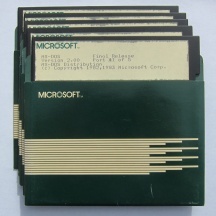
Today – June 25 – is the forty-fifth anniversary of Microsoft’s incorporation, the Computer History website notes. The move came six years after friends Bill Gates and Paul Allen founded the company in Albuquerque, N.M. to develop software for the Altair 8800 personal computer. Two months after its incorporation, IBM introduced its PC with Microsoft’s 16-bit operating system, MS-DOS 1.0. on a 5.25-inch floppy disk that could store up to 160 kilobytes.



-
AI-powered Transformation at ConocoPhillips is Fueling the Future
-
CSO hiring on the rise: How to land a top security exec role
-
Leading Change: How to Handle Three Reactions
-
In Japan, the Stratosphere Is Telecom’s Next Frontier