


Using AI to Unlock Human Potential at Liberty Mutual

Liberty Mutual's approach to generative AI reflects a central understanding: that the hardest challenges of an enterprise transformation aren't technical but human. Global CIO Monica Caldas explains while the $50 billion insurance company pursues multiple strategies for delivering value from the technology, she also frames the change in individual terms. “I talk about AI as unlocking human potential, which is a very personal transformation,” she tells Heller CEO Martha Heller in this article for CIO.com.
Communicating with the Board During High-Stakes Transformations

How can a CIO keep the board informed about major initiatives when setbacks are expected before results? Angela Maragkopoulou, the chief information and digital officer for Sunlight Group Energy Storage Systems, explains how to engage board directors in a focused presentation using three slides and 10 minutes. By focusing on progress, risks and mitigation, and decisions needed, IT leaders can convert board meetings into collaboration sessions.
Cyber Means Business: Ross McKerchar on When Security Vendors Become the Risk

In this edition of Cyber Means Business, Ross McKerchar, chief information security officer at Sophos, explains how attacks against cybersecurity vendors themselves are reshaping how organizations think about risk, trust, and responsibility. Drawing on Sophos’ experience responding to a long-running nation-state attack, McKerchar argues that security vendors must be evaluated not only on the protection they offer customers, but on the security and transparency of their own operations.
From the Wayback Machine: First Web Browser Debuts
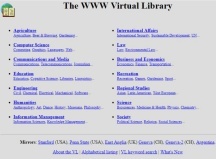
Before the AI-created videos, witty tweets and viral memes, before blogs and 24x7 media streams, there was the humble web browser introduced on February 26, 1991 by Tim Berners-Lee, the creator of the World Wide Web, This Day in Tech History notes. His team used Objective-C to develop it as a way to view certain files. Straightforwardly, Berners-Lee called the browser WorldWideWeb. “When it was written in 1990 it was the only way to see the web,” Berners-Lee notes on the World Wide Web Consortium website. “Much later it was renamed Nexus in order to save confusion between the program and the abstract information space (which is now spelled World Wide Web with spaces).”



-
AI-powered Transformation at ConocoPhillips is Fueling the Future
-
CSO hiring on the rise: How to land a top security exec role
-
Leading Change: How to Handle Three Reactions
-
In Japan, the Stratosphere Is Telecom’s Next Frontier