


You Had a Policy for Governing AI. You Needed a Platform.
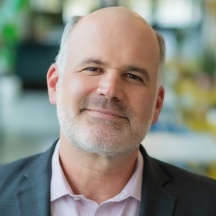
Successful AI workflows – those that can provide answers about costs, as well as security risks – call for visibility into what they are doing, when, and how. Eric Anthony Pace, a former chief AI officer and founder of The Remade Agency, argues that enterprises require a four cornerstones, including the means for a gateway, runtime security, observability and inference classification, to solidify control over these workflows.
Back in the Trenches: What ERP Implementations Continue to Teach Me
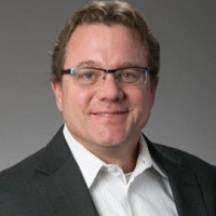
Scott Hicar thought his hands-on IT leadership career was behind him—until he began work as a fractional CIO on ERP implementation work. Hicar, a former global CIO, explains why, even with AI adoption, ERP still comes down to people and outcomes, and why iteration beats perfect planning. “The technology will continue to evolve. The fundamentals of successful transformation, however, won’t. People, process, iteration, and leadership still matter most,” he writes.
Margaret Hamilton, Whose Software Helped Land Apollo 11 On The Moon, Dies at 90

Margaret Hamilton, a trailblazing computer scientist whose research guided NASA’s moon landing, died at age 90 on September 30. Hamilton worked at MIT from 1959 until the mid-1970s and managed the Software Engineering Division, where “she led a team of engineers writing and testing all onboard in-flight software for NASA's Apollo 11 project that guided US astronauts Neil Armstrong and Buzz Aldrin to land safely on the Moon,” the BBC reported. "I was attracted both by the sheer idea and the fact that it had never been done before. I was the first programmer to join and the first woman they hired," Hamilton told an interviewer.
Heller Promotes Aanchal Bhushan to Senior Associate
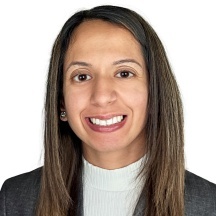
Heller has promoted Aanchal Bhushan to senior associate, a role in which she will apply her organizational and relationship-building skills to create top-tier experiences for clients and candidates. Bhushan earned a master’s in human resources from DePaul University. Prior to Heller, she worked at a staffing agency. “Aanchal’s focus on excellence in candidate delivery has earned her credibility with our client base,” says CEO Martha Heller. “We are thrilled to see her increase her impact.”



-
AI-powered Transformation at ConocoPhillips is Fueling the Future
-
CSO hiring on the rise: How to land a top security exec role
-
Leading Change: How to Handle Three Reactions
-
In Japan, the Stratosphere Is Telecom’s Next Frontier